Cherry-blossom season turns Japan into the world's most photographed country for a few fleeting weeks, and it deserves the hype. But the bloom is short and unpredictable, the crowds are enormous, and the costs catch unprepared travellers off guard. Here is how to choose your dates, plan the classic Tokyo–Kyoto route, decide whether the rail pass is worth it, and handle the visa from Dhaka.
Understanding sakura timing
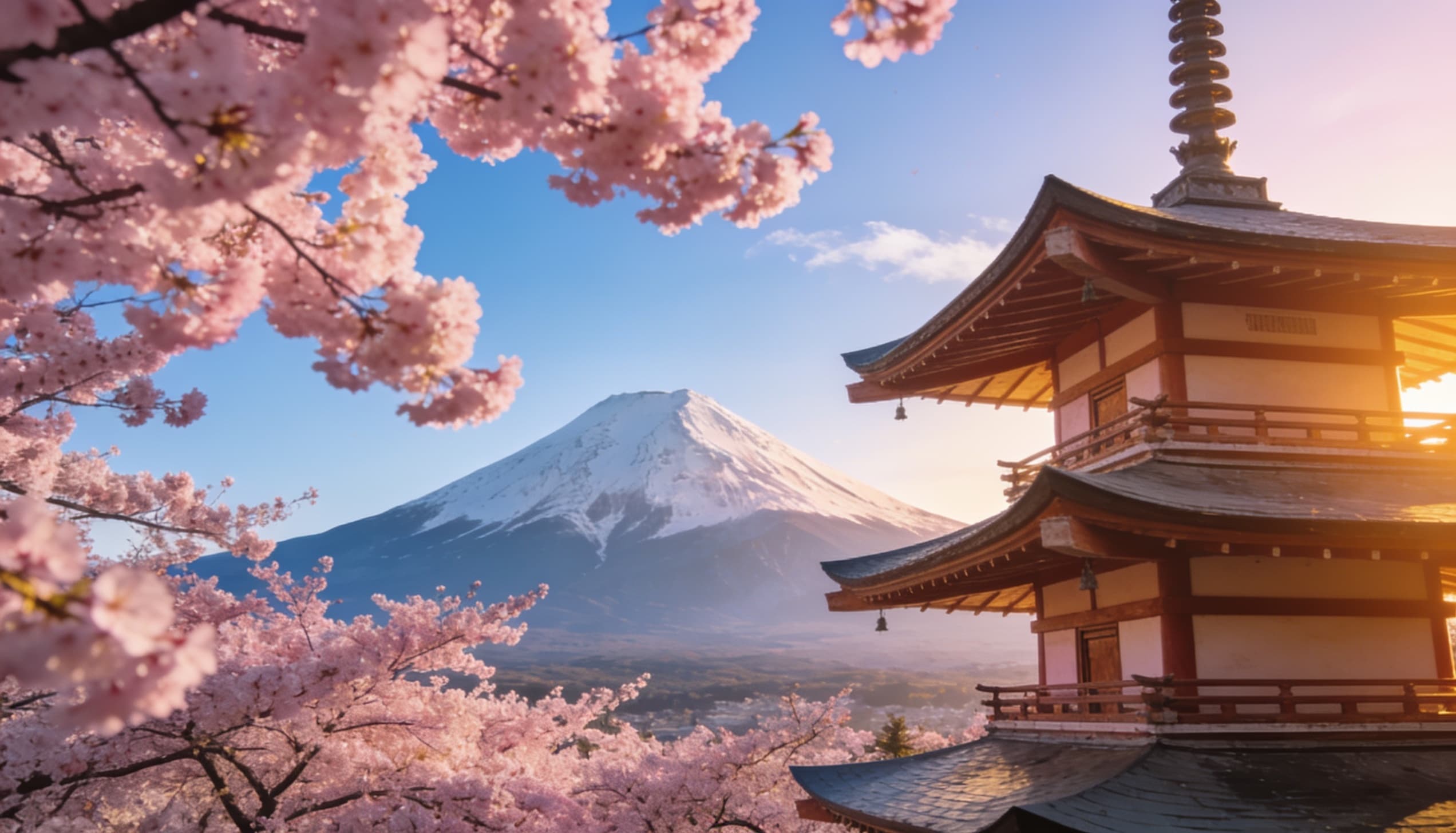
Sakura doesn't bloom on a fixed calendar date — it follows a 'cherry blossom front' that sweeps north over several weeks as temperatures warm. Broadly, Tokyo and Kyoto peak in late March to early April, while warmer Kyushu in the south blooms a little earlier and cooler Tohoku and Hokkaido in the north can run into late April or May.
Crucially, full bloom (mankai) lasts only about a week at each location, and a single rainstorm or warm spell can shift the peak by days. Forecasts are published each spring and updated frequently, but treat them as estimates. The safest strategy is to plan a trip spanning late March into early April and to keep your itinerary flexible enough to chase the bloom slightly north or south.
If you miss peak by a few days, don't despair: early bloom and the falling-petal phase (hanafubuki, when petals drift like snow) are both gorgeous. Aim for a window, not a single magic day.
The visa for Bangladeshi travellers
Bangladeshi passport holders need a visa to visit Japan, applied for before travel — there is no visa-on-arrival. You apply through the Japanese Embassy's accredited process; tourist applications generally go via an authorised travel agency rather than direct walk-in, so build that step into your timeline.
Typical documents include your passport, the application form, a recent photo, a detailed day-by-day itinerary, confirmed flight and hotel bookings, bank statements showing sufficient funds, and employment or business proof. Japan's officers like to see a coherent, well-funded plan, so a clear itinerary and solid financials matter.
Apply well ahead of cherry-blossom season, because demand for both visas and flights spikes. Start the process at least a month or two before departure, and get an experienced agent to review your file — Japan is stricter than many nearby destinations, and a thin or inconsistent application risks refusal.
Getting there from Dhaka
There's no nonstop Dhaka–Japan flight, so you'll connect — common gateways are Bangkok, Singapore, Kuala Lumpur, Dubai, Doha or a Chinese hub — into Tokyo (Narita or Haneda) or Osaka (Kansai). Flying into Tokyo and out of Osaka (or vice versa) saves backtracking and lets you travel the Tokyo–Kyoto corridor in one direction.
Round-trip fares from Dhaka to Tokyo or Osaka typically run from around ৳90,000 on the cheaper one-stop carriers up to ৳150,000+ for premium routings, and they climb sharply in cherry-blossom season. Booking two to three months ahead makes a real difference.
Total journey time with a layover is usually 12–18 hours. Choose your layover hub for a sensible connection window — long enough to be safe, short enough not to lose a day. An open-jaw ticket (in via Tokyo, out via Osaka) is often barely more expensive and far more efficient.
The classic Tokyo–Kyoto route
The most rewarding first-timer's route runs Tokyo → Kyoto (often with Osaka as a base or day trip), connected by the Tokaido Shinkansen bullet train, which covers the distance in roughly two and a half hours. A balanced split for a 7–10 day trip is about 3–4 nights in Tokyo and 3–4 in Kyoto/Osaka.
In Tokyo, sakura highlights include Ueno Park, the Meguro River canal lined with illuminated trees, Chidorigafuchi moat near the Imperial Palace, and Shinjuku Gyoen for its many varieties. Balance the blossoms with the city itself: Asakusa's Senso-ji temple, Shibuya and Shinjuku at night, and a day trip to Hakone or Kamakura.
Kyoto is the cultural heart — Kiyomizu-dera, the Philosopher's Path lined with cherry trees, Arashiyama's bamboo grove and riverside, and the vermilion gates of Fushimi Inari. Osaka, 15 minutes away by train, adds Dotonbori's neon and Japan's best casual street food. Day-trip to Nara for its temples and free-roaming deer.
Is the JR Pass worth it?
The Japan Rail Pass gives unlimited travel on most JR trains, including many shinkansen, for a fixed number of days. Its value depends entirely on how much intercity rail you'll do. After a price increase in recent years, the nationwide pass is worth it mainly if you're covering long distances — for example Tokyo–Kyoto and back, plus other regional trips.
For a simple Tokyo-then-Kyoto trip where you mostly stay put in each city, individual shinkansen tickets can be cheaper than a full nationwide pass — so do the maths against your actual route before buying. Regional passes (such as a Kansai-area pass) are often better value if your travel concentrates around Kyoto, Osaka and Nara.
Note that within cities you'll rely on metros and private lines that the nationwide JR Pass doesn't fully cover, so budget separately for local transport. A rechargeable IC card (Suica/ICOCA/PASMO) is the easy way to tap on and off local trains, buses and even convenience stores.
Budgeting realistically
Japan is not cheap, but it's manageable with planning. Mid-range hotels in Tokyo and Kyoto run roughly ৳7,000–৳15,000 a night in cherry-blossom season (book early — accommodation sells out and prices surge). Business hotels and well-run hostels bring this down considerably.
Food is where Japan pleasantly surprises: a satisfying ramen, donburi or convenience-store meal can cost very little, while a mid-range restaurant dinner is moderate. Budget around ৳2,000–৳5,000 a day for food depending on how often you splurge. Transport — shinkansen, metros, day-trip trains — is a real line item; allow for it honestly.
All in, excluding international airfare, a comfortable 7–10 day cherry-blossom trip lands somewhere around ৳120,000–৳250,000 per person depending on hotel standard and how much intercity travel you do. Carry some yen in cash; while cards are increasingly accepted, smaller shrines, markets and eateries still prefer cash.
Hanami etiquette and practical tips
Hanami — flower-viewing picnics under the trees — is a beloved ritual. If you join in, claim a spot early in popular parks, take all your rubbish with you, don't shake branches or pick blossoms, and keep noise reasonable. Many parks have evening illuminations (yozakura) that are magical and less crowded if you go on a weekday.
Japan runs on quiet courtesy: keep phone calls off trains, queue properly, don't tip, and carry a small bag for your own trash since public bins are scarce. Pointing and slurping noodles are fine; eating while walking is mildly frowned upon. A few words of Japanese — arigatou, sumimasen — go a long way.
Get a pocket Wi-Fi or a travel eSIM at the airport so you can navigate, and download offline maps. Spring weather swings between warm afternoons and chilly evenings, so dress in layers, carry a compact umbrella, and bring comfortable walking shoes — you'll cover serious distance on foot.
Common mistakes to avoid
The classic error is pinning everything on one specific date and city for peak bloom; the front shifts, and rigid plans lead to disappointment. Build a window and stay flexible. The second is underestimating crowds — the famous spots are packed, so visit at dawn or on weekdays, and seek out lesser-known parks.
Don't leave the visa or flights late; both get harder and pricier as sakura approaches. Don't assume the JR Pass is automatically worth it — price your route first. And don't over-schedule: Japan rewards lingering over a single tree-lined canal more than sprinting between twenty sights.
Finally, respect the etiquette. Japan's beauty is matched by its social order, and travellers who follow the unspoken rules are met with remarkable warmth. Plan well, stay flexible, and the blossoms will reward you.
Frequently asked questions
- Do Bangladeshis need a visa for Japan?
- Yes. Bangladeshi passport holders must obtain a visa before travel, usually applied for through an authorised travel agency with a detailed itinerary and proof of funds. There is no visa-on-arrival.
- What's the safest window to catch the cherry blossoms?
- For Tokyo and Kyoto, plan a trip spanning late March into early April, and keep your dates flexible. Full bloom lasts only about a week per location and shifts with the weather.
- Is the Japan Rail Pass worth buying?
- Only if you'll do a lot of intercity rail. For a simple Tokyo-then-Kyoto trip, individual shinkansen tickets or a regional Kansai pass can be cheaper — compare against your actual route.
- Roughly how much does a cherry-blossom trip cost?
- Excluding international airfare, a comfortable 7–10 day trip is around ৳120,000–৳250,000 per person, plus flights of roughly ৳90,000–৳150,000+. Booking early keeps both down.
- Which airports should I fly into and out of?
- Flying into Tokyo (Narita/Haneda) and out of Osaka (Kansai), or vice versa, avoids backtracking. There's no nonstop from Dhaka, so you'll connect through a regional hub.
Ready to plan this trip?
Our team plans every journey by hand, with honest pricing and real support. Tell us what you have in mind.