India's Golden Triangle, Delhi, Agra and Jaipur, packs Mughal grandeur, the Taj Mahal and royal Rajasthan into one tidy loop that's tailor-made for a first proper India trip. For Bangladeshi travellers it's especially easy: a short flight, an accessible visa and shared cultural ground. Here's a six-day day-by-day plan with the practicalities, costs in Taka and the etiquette to get it right.
Why the Golden Triangle works so well
The Golden Triangle is the most popular tourist circuit in India for good reason: three remarkable cities sit within a few hours of each other, linked by decent roads and trains, each offering something distinct. Delhi delivers history and chaos and food; Agra holds the world's most famous monument; Jaipur gives you forts, palaces and the colour of Rajasthan.
Because the route is so well-established, logistics are easy: abundant hotels at every budget, plentiful transport, and operators who run this loop daily. It's a low-risk way to experience the depth of north India without improvising a complicated route.
For Bangladeshis there's an added comfort: the food, the rhythms of street life and even much of the language feel familiar, which softens the culture shock that India can give first-timers from further afield.
Visa and getting there from Dhaka
Bangladeshi travellers need an Indian visa, applied for through the Indian Visa Application Centres in Bangladesh; a tourist visa is the standard for this trip. The process involves an online form, supporting documents and an appointment, and processing times vary, so apply well ahead and follow the current official instructions exactly, as requirements change.
Flights from Dhaka to Delhi are short, roughly two to two and a half hours direct, with several carriers; book ahead for better fares, especially around the festive and winter peak. Some travellers also enter overland, but for a tight six-day itinerary flying into Delhi and out of Delhi (or Jaipur) is far more efficient.
Carry your documents in order: passport, visa, return tickets, hotel confirmations and some US dollars or a forex card to exchange into Indian Rupees on arrival. Keep digital and paper copies of everything.
Day 1-2: Delhi
Arrive and ease in. Old Delhi is the historic heart: the vast Jama Masjid, the Red Fort, and a rickshaw ride through the frenetic lanes of Chandni Chowk, where the street food is legendary, eat carefully but do eat. Nearby, Raj Ghat offers a quieter moment.
New Delhi shows the imperial and modern city: India Gate, the grand government avenue of Rajpath, the serene Humayun's Tomb (a clear forerunner of the Taj's design) and the towering Qutub Minar. Lotus Temple and Akshardham are worth adding if you have time and energy.
Delhi is big and intense; don't over-schedule. Two nights lets you split Old and New Delhi across two manageable days, with the metro (excellent, cheap and air-conditioned) saving you from the traffic and the heat.
Day 3: Agra and the Taj Mahal
Travel from Delhi to Agra, around three to four hours by the expressway or a couple of hours by fast train; the Gatimaan/Shatabdi trains are comfortable and worth pre-booking. Aim to reach Agra so you can visit the Taj Mahal at first light the next morning, or, if time is tight, on arrival afternoon.
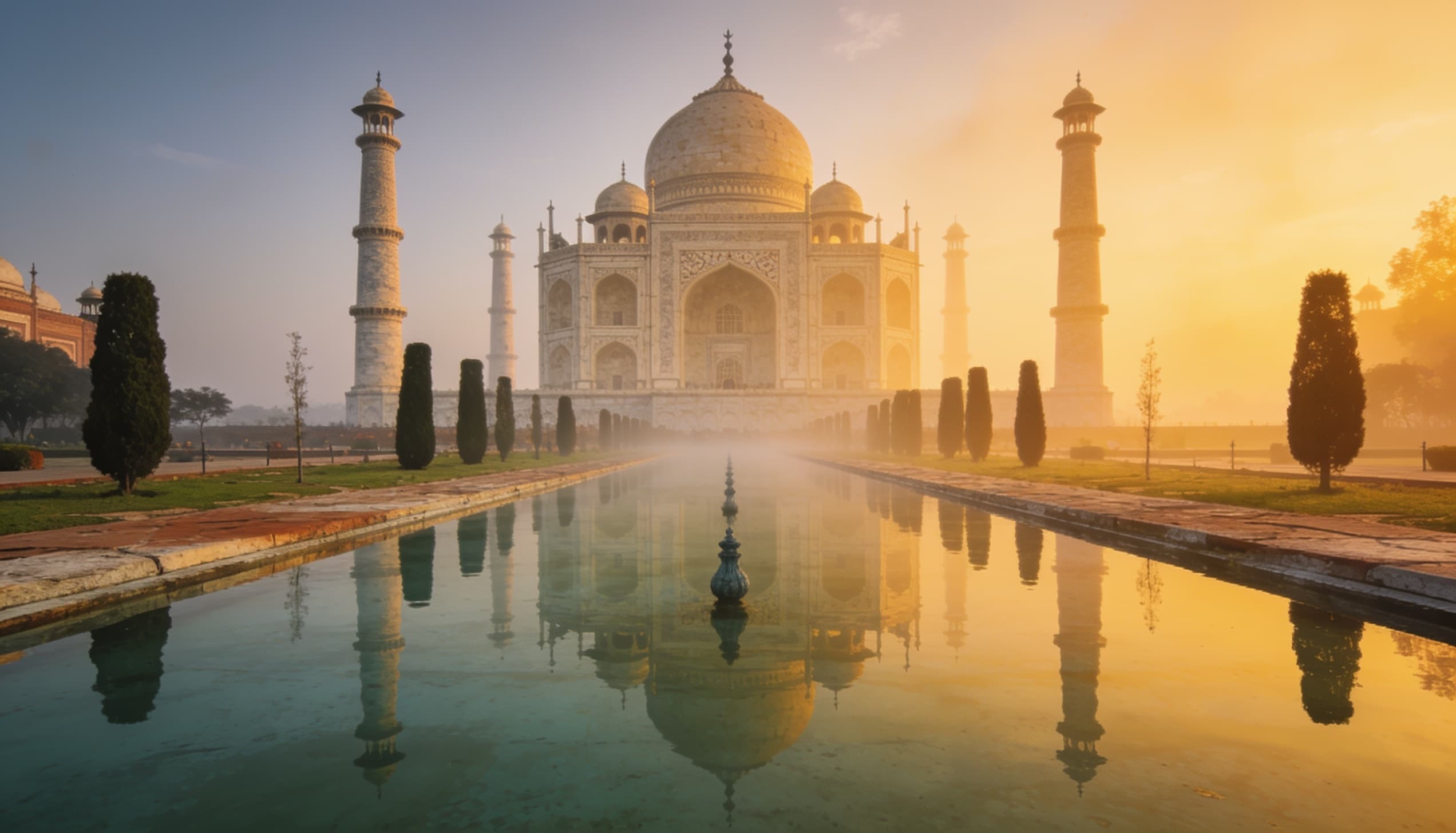
The Taj at sunrise is the experience: softer crowds, gentler light and the marble shifting colour as the sun comes up. It is closed on Fridays, so plan around that. Buy tickets in advance, expect security and bag restrictions, and hire a licensed guide to bring the story alive.
Don't skip Agra Fort, a magnificent red-sandstone Mughal complex with views back to the Taj, and if time allows, the exquisite 'Baby Taj' (Itimad-ud-Daulah). Agra's marble inlay craft makes a meaningful, if pricey, souvenir, buy from reputable shops, not touts.
Day 4-5: Jaipur, the Pink City
Drive from Agra to Jaipur (around four to five hours), ideally stopping at Fatehpur Sikri, the beautifully preserved abandoned Mughal capital, en route. Arriving in Jaipur, settle into Rajasthan's rose-hued capital.
Jaipur's headline sights are the hilltop Amber (Amer) Fort with its mirrored halls, the lake-set Jal Mahal photo stop, the honeycomb facade of Hawa Mahal, the City Palace and the astronomical instruments of Jantar Mantar. The bazaars (Johari and Bapu) are superb for textiles, jewellery and handicrafts, bargain politely.
Two nights lets you balance forts with the city's colour and shopping, and perhaps a cultural dinner with Rajasthani folk music and dance. Jaipur is the most relaxed and visually rich of the three cities, a fitting finale.
Day 6: Return
On the final day, either fly home directly from Jaipur (which has its own airport, often via a Delhi connection) or drive/train back to Delhi (around five to six hours) to fly out from there. Build a comfortable buffer for the transfer so you're not racing for a flight.
If you return via Delhi with spare hours, slot in anything you missed, a market, a museum or simply a final, leisurely meal. Avoid cramming the last day; arrive at the airport with margin, as traffic and queues are unpredictable.
Six days is brisk but very doable for the core loop. If you can spare a seventh or eighth day, add it to Jaipur or use it to slow down Delhi, both reward a more relaxed pace.
Transport, costs and how to book
The most comfortable way to do the Triangle is a hired car with driver for the whole loop; it's flexible, handles luggage and the Fatehpur Sikri stop, and is reasonably priced when shared. Trains (especially Delhi-Agra) are fast and good value but need advance booking; intercity buses are cheapest. Within cities, use the metro in Delhi and app-based taxis or autos elsewhere.
On budget, excluding flights and visa, a mid-range traveller might spend roughly ৳5,000 to ৳9,000 a day on hotel, food, transport and entry fees; note that monument tickets for foreign nationals (which includes Bangladeshis) are higher than for Indians, so budget accordingly for the Taj and forts.
A six-day mid-range trip including flights, visa, a private car and decent hotels might total on the order of ৳1.2 to ৳2.5 lakh per person, dropping with trains and budget stays or rising with upscale heritage hotels. Booking a reputable Golden Triangle package can simplify everything for a first-timer.
Etiquette, food and practical tips
Dress modestly, especially at religious sites, cover shoulders and knees, remove shoes at temples and mosques, and dress respectfully at the Taj. Ask before photographing people, and be firm but polite with the persistent touts and 'guides' outside major sites; agree prices upfront for everything.
Eat well but smartly: north India's food is a highlight, but stick to busy, freshly-cooked stalls and restaurants, drink only sealed bottled water, and ease your stomach in gently. Carry hand sanitiser, basic medicines and any prescriptions from home.
Time your trip for the cooler, drier months of roughly October to March; the north Indian summer is punishing and the monsoon disrupts travel. Keep small change handy for tips and autos, watch your belongings in crowds, and carry copies of your passport and visa at all times.
Frequently asked questions
- Do Bangladeshis need a visa for India, and is it hard to get?
- Yes, you need an Indian tourist visa, applied for through the Indian Visa Application Centres in Bangladesh with an online form, documents and an appointment. It's a well-established process; apply well ahead and follow the current official instructions exactly.
- Is six days enough for the Golden Triangle?
- Yes, six days comfortably covers the core loop: two days Delhi, one Agra, two Jaipur and a return day. A seventh or eighth day lets you slow down and is worth adding if you can.
- When is the best time to visit?
- October to March, when north India is cooler and drier. Avoid the harsh summer (April to June) and the monsoon (July to September), which bring extreme heat or travel disruption. December can be cold and foggy, occasionally delaying trains and flights.
- How should I get between the three cities?
- A hired car with driver for the whole loop is the most flexible and handles the Fatehpur Sikri stop. The fast Delhi-Agra trains are excellent value if booked ahead, and within Delhi the metro beats the traffic.
- What should I budget for the trip?
- Excluding flights and visa, a mid-range traveller might spend roughly ৳5,000 to ৳9,000 a day. A six-day trip with flights, visa, private car and decent hotels can total around ৳1.2 to ৳2.5 lakh per person, less with trains and budget stays.
Ready to plan this trip?
Our team plans every journey by hand, with honest pricing and real support. Tell us what you have in mind.